


4.0 SOHC Dyno Results




4.0 SOHC Dyno Results
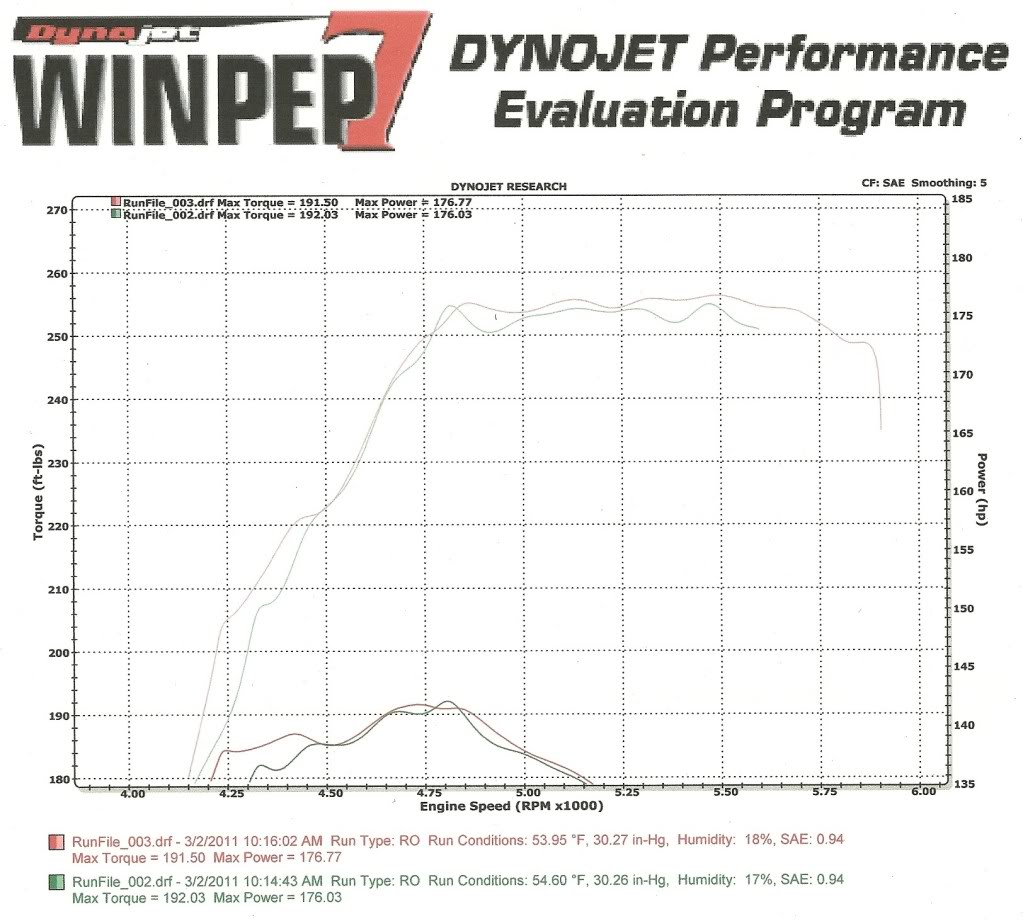
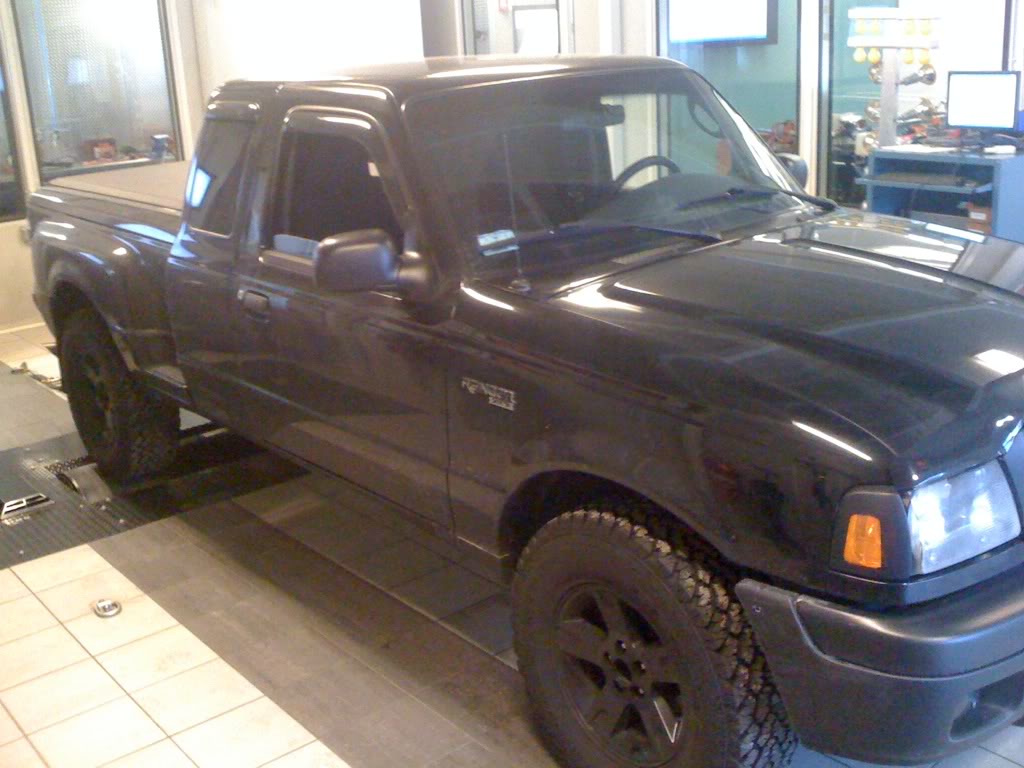
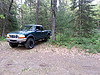
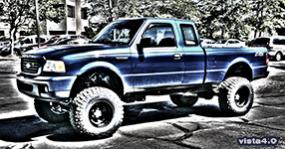
So if you don't all know I'm in school for High Performance at NEIT in Warwick RI and the time came to using the dyno with our personal vehicles so i figured hell with it lets do the ranger. I made more passes but these are my best runs. all runs where done in 2nd gear to 5500 RPM. Heck it made more than a 94' Stock 5.0 with exhaust.



I was wondering about this. I thought it seemed odd to have a 2nd gear run.
It seems to me that the transmission ratio correction would be done the same way the axle ratio and tire diameter corrections are done - with a simple multiplier. Done correctly, using 2nd gear would keep the dyno speeds within reason and yield the same measured torque result as 4th gear (except for whatever frictional difference there is between the transmission gearsets).
Besides, it isn't possible to do a 4th gear pull to 5500 RPM with a stock Ranger that is speed limited to 92 MPH and couldn't pull a 1:1 trans ratio to 5500 RPM (roughly 120~130 MPH) even if there were no limiter.
Besides, it isn't possible to do a 4th gear pull to 5500 RPM with a stock Ranger that is speed limited to 92 MPH and couldn't pull a 1:1 trans ratio to 5500 RPM (roughly 120~130 MPH) even if there were no limiter.
It seems to me that the transmission ratio correction would be done the same way the axle ratio and tire diameter corrections are done - with a simple multiplier. Done correctly, using 2nd gear would keep the dyno speeds within reason and yield the same measured torque result as 4th gear (except for whatever frictional difference there is between the transmission gearsets).
Besides, it isn't possible to do a 4th gear pull to 5500 RPM with a stock Ranger that is speed limited to 92 MPH and couldn't pull a 1:1 trans ratio to 5500 RPM (roughly 120~130 MPH) even if there were no limiter.
Besides, it isn't possible to do a 4th gear pull to 5500 RPM with a stock Ranger that is speed limited to 92 MPH and couldn't pull a 1:1 trans ratio to 5500 RPM (roughly 120~130 MPH) even if there were no limiter.
Yes. Ford developed your 5 speed from the earlier 4 speed by using 1st + overdrive to create the new 2nd gear. However, the indicator doesn't reflect that change. So when you manually select "2" in the 5-speed, you get the new 3rd gear which is 1.47:1 (same as the old transmission's 2nd gear). 
Comparison of 4R44E/4R55E 4-speed and 5R44E/5R55E 5-speed (current Ranger):
4R44E, 4R55E
1st 2.47
2nd 1.47
3rd 1.00
4th 0.75 (1.00 x 0.75)
5th ---
5R44E, 5R55E
1st 2.47
2nd 1.85 (2.47 x 0.75) <----(added gear in the 5-speed)
3rd 1.47
4th 1.00
5th 0.75 (1.00 x 0.75)
Comparison of 4R44E/4R55E 4-speed and 5R44E/5R55E 5-speed (current Ranger):
4R44E, 4R55E
1st 2.47
2nd 1.47
3rd 1.00
4th 0.75 (1.00 x 0.75)
5th ---
5R44E, 5R55E
1st 2.47
2nd 1.85 (2.47 x 0.75) <----(added gear in the 5-speed)
3rd 1.47
4th 1.00
5th 0.75 (1.00 x 0.75)

Member

Joined: Jan 2011
Posts: 129
Likes: 0
From: West Deptford NJ
It seems to me that the transmission ratio correction would be done the same way the axle ratio and tire diameter corrections are done - with a simple multiplier. Done correctly, using 2nd gear would keep the dyno speeds within reason and yield the same measured torque result as 4th gear (except for whatever frictional difference there is between the transmission gearsets).
Besides, it isn't possible to do a 4th gear pull to 5500 RPM with a stock Ranger that is speed limited to 92 MPH and couldn't pull a 1:1 trans ratio to 5500 RPM (roughly 120~130 MPH) even if there were no limiter.
Besides, it isn't possible to do a 4th gear pull to 5500 RPM with a stock Ranger that is speed limited to 92 MPH and couldn't pull a 1:1 trans ratio to 5500 RPM (roughly 120~130 MPH) even if there were no limiter.
But why couldn't it get the drivetrain up to 5500RPM in 4th gear? The vehicle is stationary, there is no aerodynamic concerns present.
The speed limiter is unfortunate, yes. I have a feeling that unplugging the output shaft speed sensor (disabling the speedometer) might disable the speed limiter.
But why couldn't it get the drivetrain up to 5500RPM in 4th gear? The vehicle is stationary, there is no aerodynamic concerns present.
But why couldn't it get the drivetrain up to 5500RPM in 4th gear? The vehicle is stationary, there is no aerodynamic concerns present.
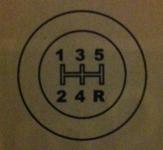
Yes. Ford developed your 5 speed from the earlier 4 speed by using 1st + overdrive to create the new 2nd gear. However, the indicator doesn't reflect that change. So when you manually select "2" in the 5-speed, you get the new 3rd gear which is 1.47:1 (same as the old transmission's 2nd gear).
Comparison of 4R44E/4R55E 4-speed and 5R44E/5R55E 5-speed (current Ranger):
4R44E, 4R55E
1st 2.47
2nd 1.47
3rd 1.00
4th 0.75 (1.00 x 0.75)
5th ---
5R44E, 5R55E
1st 2.47
2nd 1.85 (2.47 x 0.75) <----(added gear in the 5-speed)
3rd 1.47
4th 1.00
5th 0.75 (1.00 x 0.75)
Comparison of 4R44E/4R55E 4-speed and 5R44E/5R55E 5-speed (current Ranger):
4R44E, 4R55E
1st 2.47
2nd 1.47
3rd 1.00
4th 0.75 (1.00 x 0.75)
5th ---
5R44E, 5R55E
1st 2.47
2nd 1.85 (2.47 x 0.75) <----(added gear in the 5-speed)
3rd 1.47
4th 1.00
5th 0.75 (1.00 x 0.75)
During part throttle acceleration, the 5RxxE transmission skips the new 2nd gear so it uses exactly the same gear ratios as the earlier 4RxxE transmission. 2nd is only used for WOT or near WOT for improved acceleration.
In lever position "2", actually 3rd gear in the 5R, you're still under the 92 MPH speed limiter at 5500 RPM.
lucky for you fellas ill post a dyno sheet when i buy a tuner. just unsure of what I'm going to buy.
Member
Joined: Feb 2005
Posts: 1,273
Likes: 116
From: Costa Mesa, CA
Gearing and tire diameter should have no effect on dyno numbers unless there is tire slippage. When my race car is on the dyno, they want me to run tall tires and tall differential gears in forth gear to help eliminate tires slippage. That is because the car is so light.
has nothing to do with numbers. the dyno didn't pick up any vibrations from the tires. the gearing didn't affect the numbers


