


How To: Install EBC Brakes And Pads
#1
 08-14-2008


How To: Install EBC Brakes And Pads
Here is the install of EBC USR rotors and EBC Yellowstuff pads onto my 2002 2wd Ranger Edge.
Tools needed:
A jack
Jackstands
An impact gun
Sockets for the impact
A hand ratchet
Assorted sockets for the ratchet
A flathead screwdriver
Wheel bearing grease
A torque wrench
A bottle of Loctite
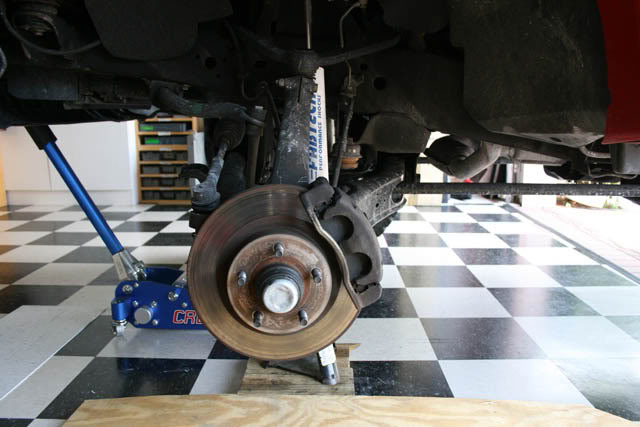
First jack the truck up and place it on a jackstand. Then remove the wheel.
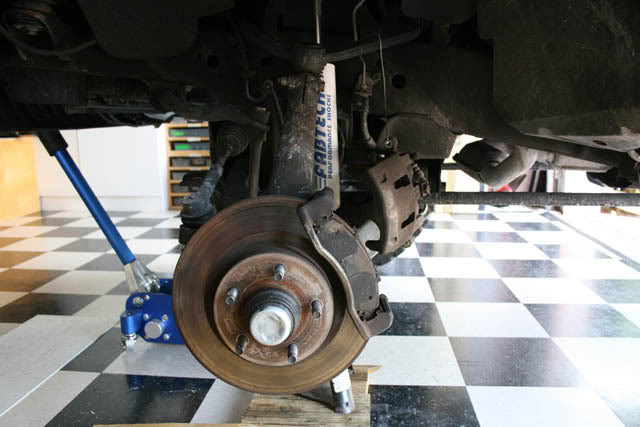
Next go ahead and unbolt the caliper from the bracket, then make a little hanger to hold it out of the way. Do not let it dangle by the brake line.
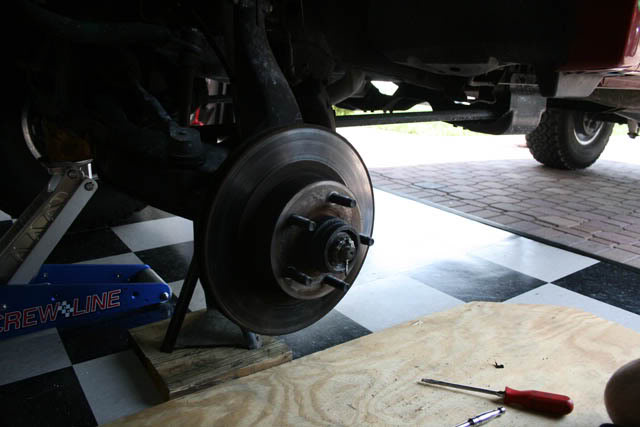
Unbolt the caliper bracket and place it out of the way.
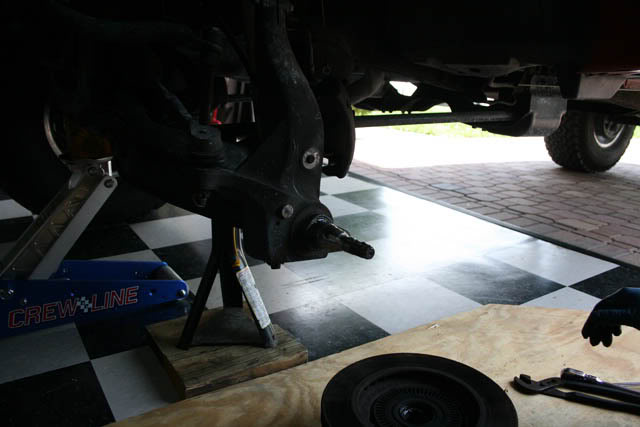
Remove the dust cap, cotter pin, and retaining bolt. Now pull the disk off of the spindle. Wipe all the old grease off of the spindle also.
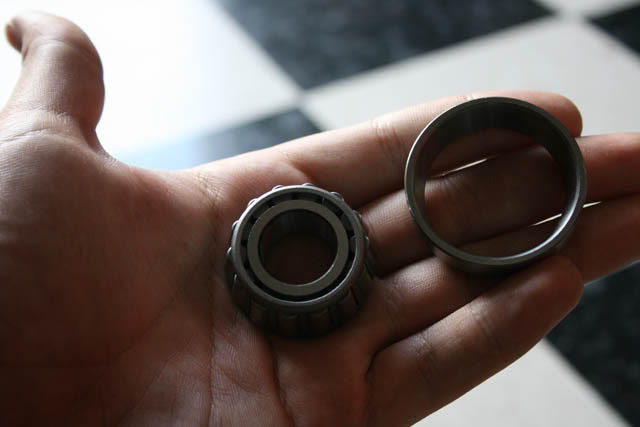
The new bearings come with new races also, these disks already have races in them so you can discard the races that came with the bearings.
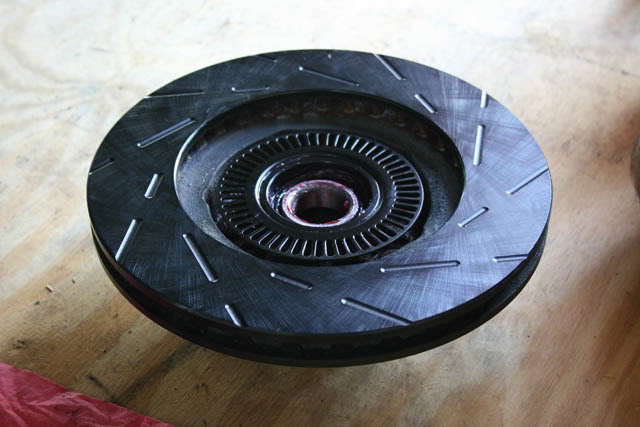
Pack your new inner bearing with wheel bearing grease, there are several ways to do this but by far the easiest is to use a grease gun and buy a cheap bearing packer attachment which will run you ~$10. Also put some grease inbetween the bearing race and the bearing itself.
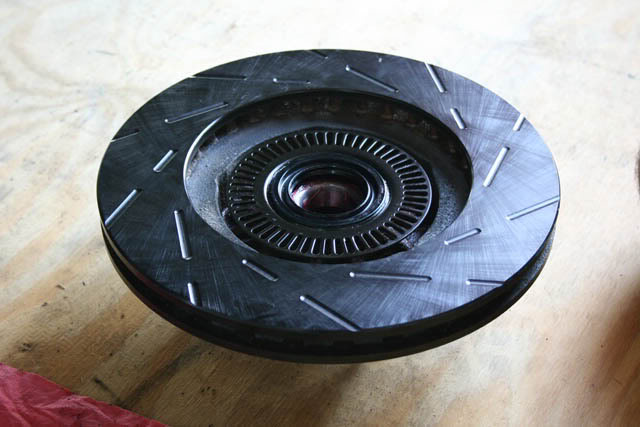
Install your new seal over them.
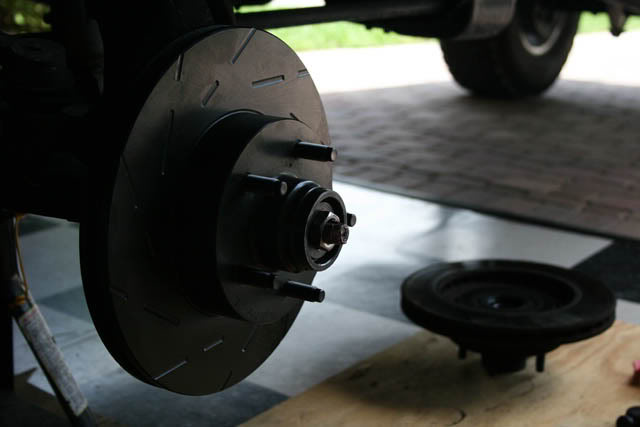
Pack and install your new outer bearing just like the inner. Apply a decent amount of grease to the spindle and slide the new rotor on. Now put the old washer back on and thread the retaining bolt on by hand.
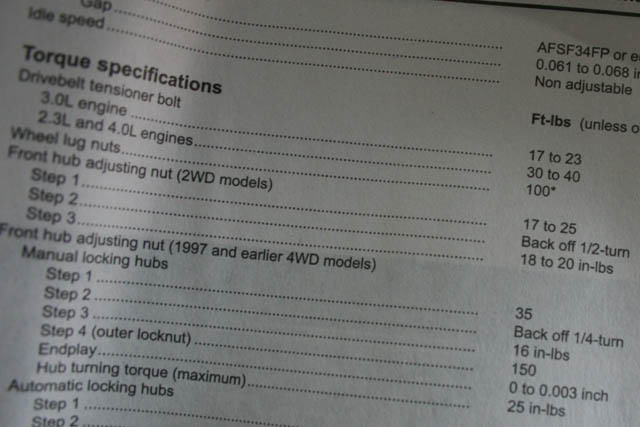
Here is the procedure for tightening the retaining nut.
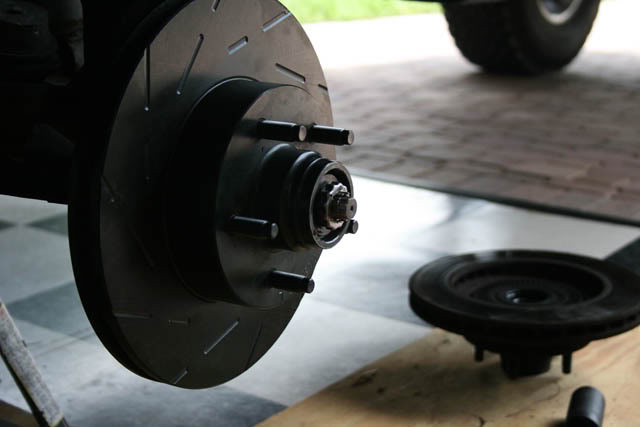
With it tightened install the little piece that keeps it from coming out.
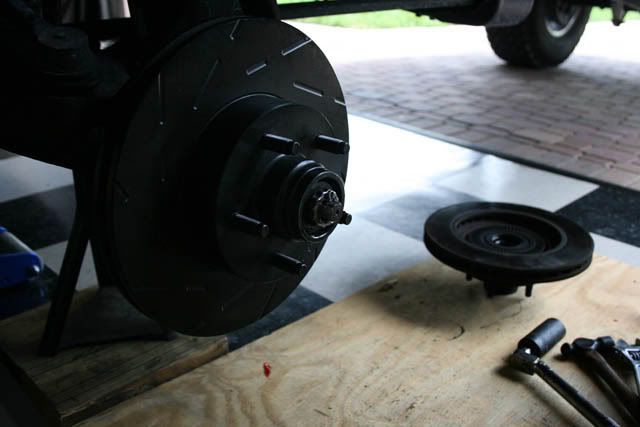
Install a new cotter pin.
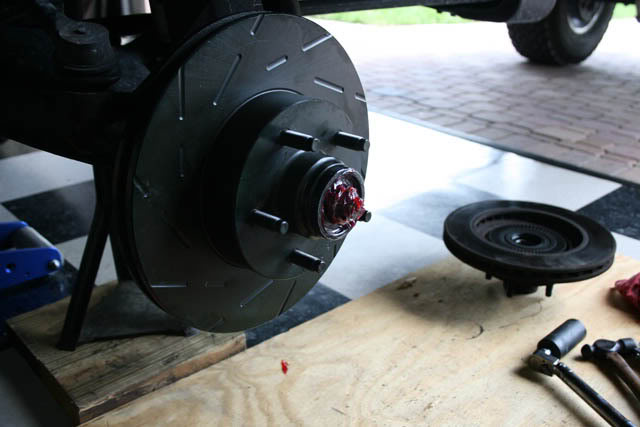
Now put a nice amount of grease onto all of it.
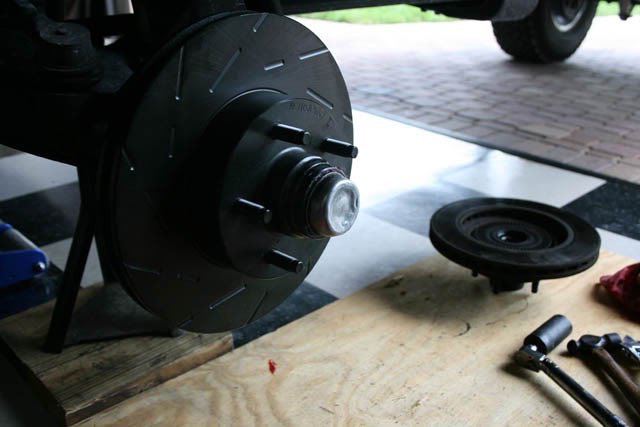
Reinstall your dust cap.
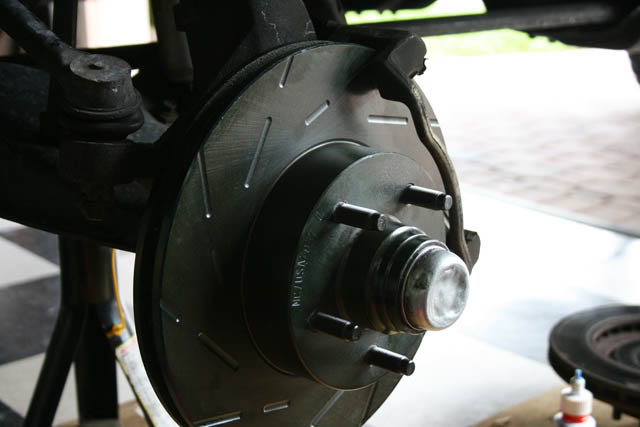
Reinstall the caliper bracket, I used a little bit of blue Loctite on the bolts since they were pretty loose when I took them off.
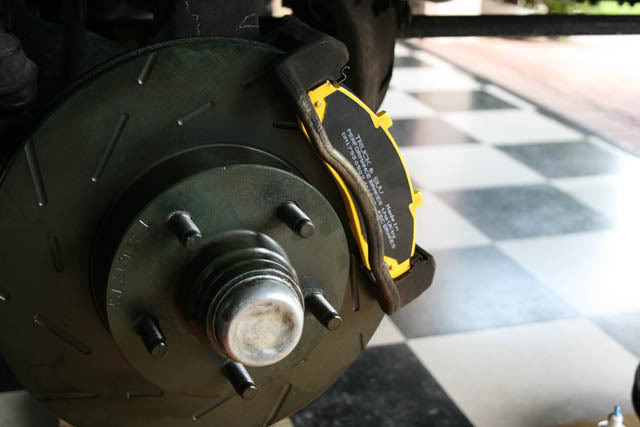
Put the new pads in place.
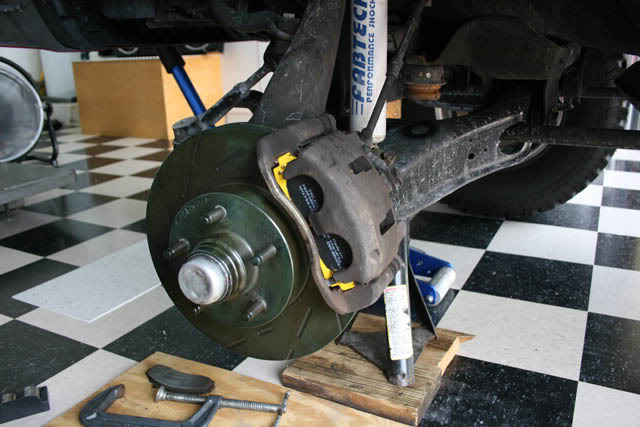
Put the caliper back on and bolt it back down. You will have to most likely push the pistons back in to get it to fit. This can be done by placing an old pad over them and then using a C clamp to push them back in. Be careful, brake fluid may come out of the reservoir when you do this.
Now reinstall the wheel and repeat on the other side. Now is a good time to replace your brake fluid also, but the rain stopped us from being able to do that today.
The proper way to bed these in according to EBC is to go from 40mph to a complete stop five times with one minute intervals inbetween and apply more brake pressure after every one. Be sure to do this on a closed road or a road with no traffic.
Here is a comparison video between the two. And no, it was no comparing them to pads that were shot. They had plenty of life still left in them. The difference between the two is night and day. I haven't had any squeeking yet either and they bite GREAT cold and hot.
Tools needed:
A jack
Jackstands
An impact gun
Sockets for the impact
A hand ratchet
Assorted sockets for the ratchet
A flathead screwdriver
Wheel bearing grease
A torque wrench
A bottle of Loctite
First jack the truck up and place it on a jackstand. Then remove the wheel.
Next go ahead and unbolt the caliper from the bracket, then make a little hanger to hold it out of the way. Do not let it dangle by the brake line.
Unbolt the caliper bracket and place it out of the way.
Remove the dust cap, cotter pin, and retaining bolt. Now pull the disk off of the spindle. Wipe all the old grease off of the spindle also.
The new bearings come with new races also, these disks already have races in them so you can discard the races that came with the bearings.
Pack your new inner bearing with wheel bearing grease, there are several ways to do this but by far the easiest is to use a grease gun and buy a cheap bearing packer attachment which will run you ~$10. Also put some grease inbetween the bearing race and the bearing itself.
Install your new seal over them.
Pack and install your new outer bearing just like the inner. Apply a decent amount of grease to the spindle and slide the new rotor on. Now put the old washer back on and thread the retaining bolt on by hand.
Here is the procedure for tightening the retaining nut.
With it tightened install the little piece that keeps it from coming out.
Install a new cotter pin.
Now put a nice amount of grease onto all of it.
Reinstall your dust cap.
Reinstall the caliper bracket, I used a little bit of blue Loctite on the bolts since they were pretty loose when I took them off.
Put the new pads in place.
Put the caliper back on and bolt it back down. You will have to most likely push the pistons back in to get it to fit. This can be done by placing an old pad over them and then using a C clamp to push them back in. Be careful, brake fluid may come out of the reservoir when you do this.
Now reinstall the wheel and repeat on the other side. Now is a good time to replace your brake fluid also, but the rain stopped us from being able to do that today.
The proper way to bed these in according to EBC is to go from 40mph to a complete stop five times with one minute intervals inbetween and apply more brake pressure after every one. Be sure to do this on a closed road or a road with no traffic.
Here is a comparison video between the two. And no, it was no comparing them to pads that were shot. They had plenty of life still left in them. The difference between the two is night and day. I haven't had any squeeking yet either and they bite GREAT cold and hot.
Last edited by korey89; 03-18-2009 at 09:01 PM.


Thread
Thread Starter
Forum
Replies
Last Post
Tys 4x4 FTW
Ranger Products, Company, & Member Reviews
21
11-01-2010 09:47 PM
barrman
General Ford Ranger Discussion
32
07-15-2005 11:55 AM
FoMoCoFiddy
General Ford Ranger Discussion
43
02-09-2005 09:34 AM


