When you click on links to various merchants on this site and make a purchase, this can result in this site earning a commission. Affiliate programs and affiliations include, but are not limited to, the eBay Partner Network.
I did what I thought was a good idea but the results might not be so good. The vehicles’s a 2004 Ranger 2.3L, 16 valve RWD. Automatic. A compression test showed that cylinders 1, 2 and 3 had low compression and a leak down test pointed to leaky exhaust valves. So I proceeded to remove the cylinder head to see what exactly was the problem.
Well, as is often the case, the crankshaft pulley bolt was stuck real good. Even an impact driver wasn’t able to undo it. I was finally able to loosen the bolt with a socket on the bolt head, resting a break bar on the frame and starting the engine. The bolt came loose. The engine turned for maybe 2 seconds. But now the engine jams near TDC when I rotate it manually (I haven’t yet removed the head. It’s a pain).
The pulley spun freely after the bolt came loose so i’m thinking that maybe one or more pistons crushed one or more valves but I can’t see how that can jam
the engine at a single point of its rotation. It feels lik it’s hitting something (sounds like the counterweight hitting an alignment peg but no peg is installed). It’s not a smooth jam; it is hitting something solid because I hear a dull knock/thud like something is hitting something. And I believe the engine is non interference so the pistons should not be anywhere near the valves (but I can be wrong).
Any idea why the engine jams near TDC? I’ll keep trying to get the head off but I’m wondering if I might make things worse if I continue before understanding what jammed and why.
The 2.3 duratech is an interference engine, the older lima engines were non interference. More bad news, removing the pulley bolt without locking the cams can cause engine damage because the pulley is not keyed. You most likely have part of a broken valve jamming against the piston at TDC or if you're lucky the valve timing is just knocked off and the thud is the piston hitting the valve at the wrong timing. Keep taking the head off you cant make it any worse and you'll need to check \ repair the valves anyway. hopefully it didnt do any damage to the piston or cylinder wall.
Last edited by Apexkeeper; May 28, 2018 at 06:43 AM.
Reads like cams are no longer in time with crank so #1 or #4 piston is hitting a valve
Check the crank timing gear carefully, may have sheared off the woodruf key
No way to lock timing chain gear to crank, didn't know that, not sure if thats a good idea
Image I see of crank gear shows a slot for a key, as does the crank
Cam gears are often pressure fits, no keys, but never heard of that for crank gear, learn something new every day
There's none on the cam sprocket gears either.
The gear on the crank is held in place with this special washer and a whole lot of torque, that's why Crickets (Mario) was having such a hard time loosening it.
There's a special bolt that you put in to the side of the block to lock up the crank while timing the engine.
But here's a nother video that shows there is a woodruff key.
If you look at the top of the engine, the guy has the cam shaft locking plate in position.
Correct, folks. I was aware the crankshaft wasn’t keyed but I would have imagined the pulley would have been pressure fitted. And I thought the alignment hole was simply to synchronize the harmonic damper to the firing order. Silly me for assuming m too much (although it wouldmake sense to remove the single point of failure due to a
No key in harmonic balancer Unkeyed crankshaft stub
loose crankshaft bolt).
It is a really dumb design in my opinion to put a non keyed crank pulley on a interference engine so don't feel too bad. The first time I did a timing belt on a dohc interfenrece motor I did the same thing. I managed to destroy a valve and gouge a piston when I cranked it. I did crank it more than once though so hopefully your luckier than me and didn't actually break anything since you just bumped it.
Oh man. That sucks. I suppose misery likes company ... lol. But still. Poor design. This is my first time also. I figured it’s a good learning experience at minimal cost (the truck is valued at less than $1000 although my wife doesn’t see it that way. She wants it back).
I removed the timing chain and injectors earlier today (and they’re stuck in the head). The rail came off but not the injectors so I decided to take a break by stepping away from it. One problem at a time. I’ll pick it up again tomorrow and will keep you folks posted. Hopefully, my mistakes will help someone else avoid them.
I removed the head today. An initial, quick visual inspection seems to suggest that at least one each of the exhaust valves on cylinders 1, 2 and 3 are burnt, so that explains low compression on those cylinders.
I also took took a look into the cylinder bores themselves and it doesn’t appear that I damaged anything when I undid the crankshaft bolt using the starter and breaker bar method. But i’m not sure. Your thoughts are welcome.
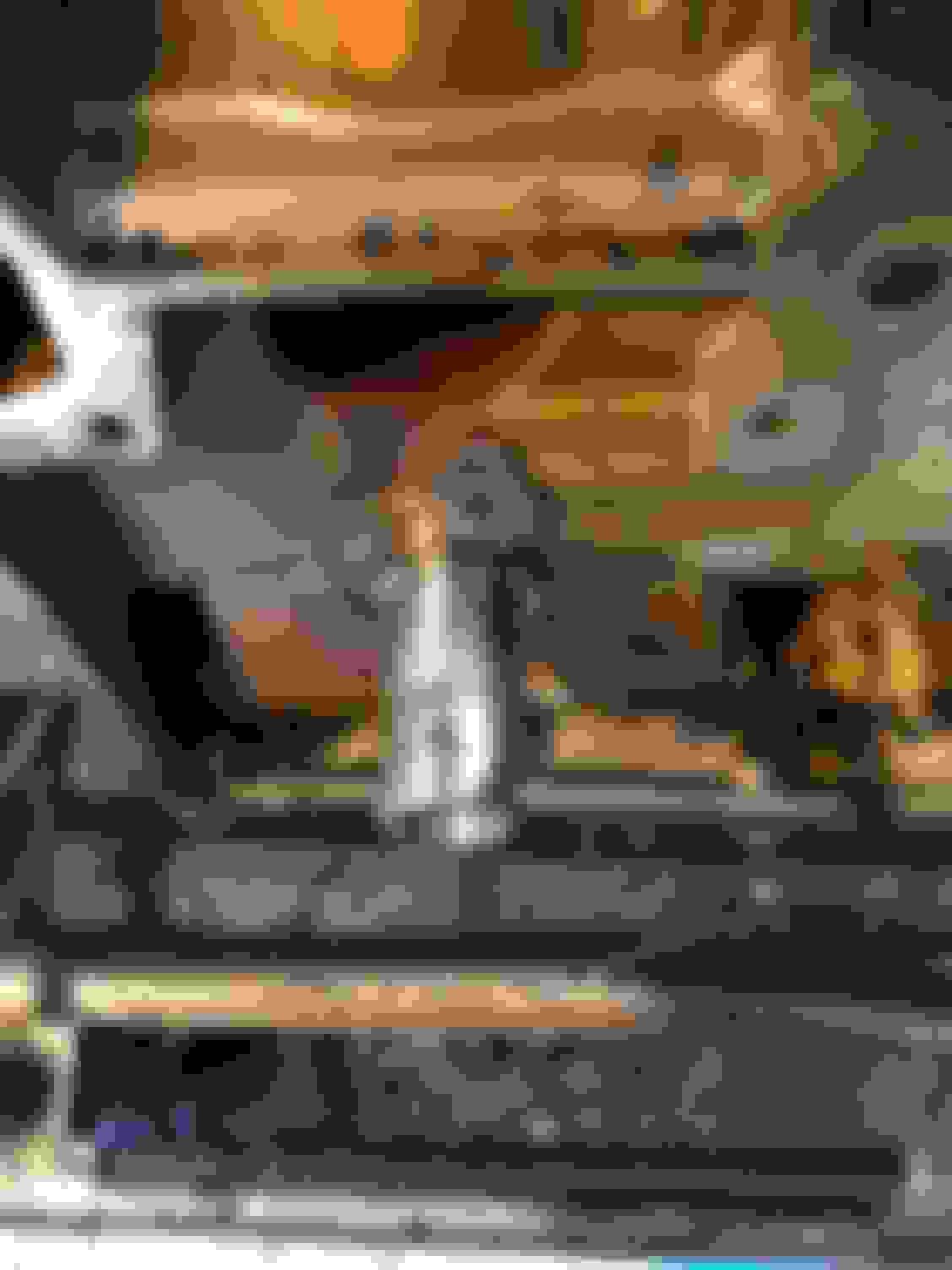
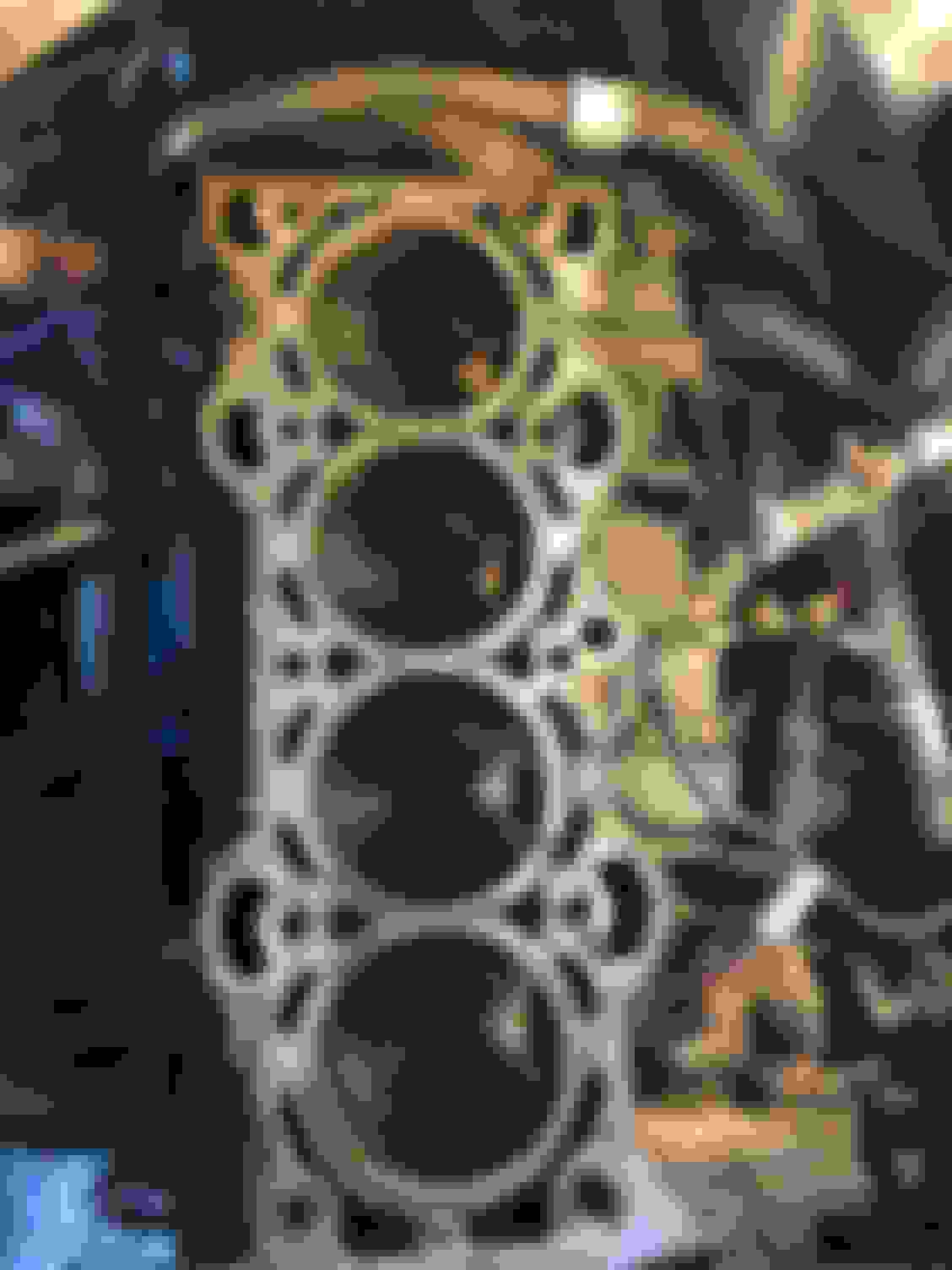
Attached are 4 pictures of the head that show some type of white spot on the intake valve side of the engine. The spots are not dents or indentations. They’re one layer below the blackish/brownish coating on the piston. Sort of like chopped paint.
Can anyone tell if those spots are normal wear and tear ciaued by explosions from combustion in the cylinders? Or can they be caused by the valves scraping against the cylinders due to the way I undid the crankshaft bolt? Thanks.
Cylinder 1 closeup Overhead view of head. White spots on right side Cylinder 1 wider view Cylinder 2 wide view
It was running a little Rich for awhile, what was MPG like?
Looks to be an even carbon layer across the top which is normal, but it was being "washed" under the intake valves toward the end causing carbon layer to be removed, you are seeing bare metal of piston, like it was new.
Ive taken apart alot of engines but gotta admit, that piston pattern is new to me... its like the fuel was cleaning the pistons before ignition. But only way I see that happening is on an extremely retarded (its the correct term) engine. Anyway I see no "damage" just a strange carbon pattern. I see what could be an exhaust valve imprint on cylinder 1. But again, not damage. probably a mark from hitting when you were trying to figure out what was stuck.
RonD, you’re spot on. MPG was pretty bad. I never calculated it but it took a lot of gas for short trips. For example, a 40 mile round trip, mainly highway consumed a little under 1/4 tank.
The engine wasn’t jammed or locked. One piston hit on something after I undid the crankshaft bolt using the breaker bar/starter method. I noticed this when I rotated the engine to find cylinder 1 TDC afterwards. The pistons turn smoothly now that the cylinder head is off.
Apexkeeper, interesting observation you made. The engine idled real rough for the longest time. Sure seems like a retarded engine timing now that you mention it. In fact, It seems like the previous owner did cylinder work because the bolts were not torqued evenly - some were tighter than others.
Thanks for for your help folks. You set me in the right direction. I’ll update this thread in a few weeks after I get the cylinder head checked out. This is my first cylinder head job so I’m working slowly + taking tons of pictures so it takes me a long time to get through each task.
Just for future reference when you need to tighten or remove crank pulley bolt on a vehicle with an automatic(you just leave manual in 1st to hold crank) you can use a rope inside a cylinder to hold piston in place at TDC
Remove all spark plugs
Rotate crank until #1 is on compression stroke, i.e. intake and exhaust valve closed(IMPORTANT!!), stop when crank is 1/4 turn from TDC mark
Feed rope down #1 spark plug hole, don't need a lot, it will coil up
turn crank to see if rope stops the piston at TDC
Tightening or loosening the bolt
On compression stoke go past TDC a 1/4 turn, then put in the rope and turn crank back, valves will be closed(thats the BIG DEAL) and now crank is locked in the other direction
It won't hurt anything, rope is softer than metal, and won't hurt bearings or piston parts, when a cylinder FIRES there alot more stress on those parts than leverage needed to undo a crank bolt
This "rope thing" is also used to change valve springs or valve guide seals without head removal
The rope will hold the valves closed so you can remove keepers and replace parts
Rope “trick” is interesting. I seem to remember reading about it on some forum but discounted it because no one explained it in such detail as you did. Very interesting.
Does the rope method work for all cars, types or engines like V6, inline 4, new, old etc? I ask because I own a 1986 Chrysler New Yorker 2.2L turbo that I’ll have to do a timing belt change out soon (sorry for asking the question on a Ranger Forum. Hopefully, I won’t be censured :-)).
Yes, works on any gasoline or diesel piston engine
Even used it on my lawn mower to change the blade, direct drive on crank
TDC Valves CLOSED in the cylinder you will use, thats the BIG DEAL
Hi folks,
As promised, I’d give an update on my first cylinder head swap. It took a while but I eventually got it done (the 2.3L Ranger is a bear to work on). I started the car today and it works. I surprised myself. Unfortunately, one or more gurl injectors leaks. I suspected there’d be a leak since the o-ring la in a kit I bought were too fat around so I ended up having to reuse the original o-rings with the hope they’d seal.
I’ll remove the intake tomorrow to see what’s going on.
Lesson learned: next time I’ll check for leaks by pressurizing the fuel system by turning the ignition key to “start” but not cranking before I reassemble everything.
I have a list if “things” that I’ll share on this forum as soon as I fix the gas leak. Hoping it’ll help others avoid my mistakes that led to rework.
Take some pics of your work. Might be helpful to the next guy who has the same issues. Glad to hear it's coming along though.
For sure. I took tons of pictures to help me remember what went where. I’ll pick a few good ones, notate them and post them here. As before, I’ll need a few weeks to get this last issue fixed.
That engine is over designed and poorly conceived _ most would just get another engine.
When I told my machinist about the "no woodruff key" thing he said "more and more of the V8's are going that route".
Even seasoned mechanics goof up when working on this thing.
That engine is over designed and poorly conceived _ most would just get another engine.
When I told my machinist about the "no woodruff key" thing he said "more and more of the V8's are going that route".
Even seasoned mechanics goof up when working on this thing.
I think you did really well Mario.
Thanks for the compliment. Interestingly enough, that’s one of the things I learned from the cylinder head swap experience: I don’t recommend using the starter method to break the crankshaft pulley bolt like I did - too many incidental issues can happen because we can never be sure how the crankshaft pulley is held in place. To your point, more cars seem to be relying on friction.
There’s a concept called Poke Yoke popularized by Toyota after WWII. It basically means “fits only one way.” The Woodruff Key is just that: fits only one way. Great concept, that key. The fact that the Ranger doesn’t use it increases the chances of something going wrong. So, yes, you’re right: engine is over designed. I did nothing but check and double check the timing over 3 days just to be sure I missed nothing. It drove me batty ... felt like Groundhog Day ... lol
The duratec series of engines is proven over 20 years. They had some dumb crap like the intake runner control in the early 2000's but overall the engine is solid. There are tons of duratecs out there running 300k+ miles. The base engine is as solid a design as a chevy 350. They dont die. They need maintenance, and in this case cricks made a little mistake on disassembly but when he gets it fixed back up itll probably run until he gives it to his grand kids.
Last edited by Apexkeeper; Jul 1, 2018 at 07:24 PM.