


Acceleration Hesitation and Intake Backfire


Thread Starter
|
Member

Joined: Oct 2013
Posts: 3
Likes: 1
From: WestBaden, IN
Acceleration Hesitation and Intake Backfire
I have searched all over this other forums. Googled till my fingers are tired. The closest I’ve come to what my truck is doing has been a thread in this forum about Ranger doing something like mine during snow fall.
Now my deal…
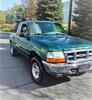
It’s a 1999 XLT Extended 4x4, 4.0 OVH(X Code), 5R55E Automatic. I recently had the Transmission rebuilt but it done this before the rebuild. Wires, plugs, fuel and Air filters new. Air box sealed and tight. Fuel system cleaners of all types used. Truck starts fine, you can rev it up no problem. Place it in gear and press on the gas, does OK at low speed. When you press down the gas to gain speed, it will hesitate, cough and sometime backfire thru intake. Engine does not seem to need to be at operating temp, does it cold or warmed up. Seems to go away after you have drove it a bit, time duration. The only common factor seems to be that it acts up after a rain or heavy dew and the temp is around 45 to 50 degrees. And NO Engine Codes!!!!
What do you all think is going on?
Now my deal…
It’s a 1999 XLT Extended 4x4, 4.0 OVH(X Code), 5R55E Automatic. I recently had the Transmission rebuilt but it done this before the rebuild. Wires, plugs, fuel and Air filters new. Air box sealed and tight. Fuel system cleaners of all types used. Truck starts fine, you can rev it up no problem. Place it in gear and press on the gas, does OK at low speed. When you press down the gas to gain speed, it will hesitate, cough and sometime backfire thru intake. Engine does not seem to need to be at operating temp, does it cold or warmed up. Seems to go away after you have drove it a bit, time duration. The only common factor seems to be that it acts up after a rain or heavy dew and the temp is around 45 to 50 degrees. And NO Engine Codes!!!!
What do you all think is going on?



Reads like you are running too lean.
Stumble, hesitation and back fire are all signs of Lean.
Computer tries to keep air:fuel at 14:1, that's 14 pounds of air to 1 pound of gasoline
MAF(mass air flow) sensor is the start of that, it measures how many pounds of air are coming in.
Computer then uses that measurement to add the needed pounds of fuel.
I notice you mentioned air box sealed tight, I assume you mean the air tube from MAF to intake, so you know how important it is that ALL the air coming into the engine needs to pass thru the MAF or computers 14:1 calculations will be off, it will be lean.
I would unplug the MAF sensor and start the engine, CEL should come on right away, but engine should still start and run.
O2 sensors have the final say as far as computer is concerned.
But O2 sensors only work when they are above 650degF, so on cold engine there is no O2 feedback until engine warms up a bit, usually about 5minutes
O2 sensor can only see Oxygen, not fuel, so Lean mean too much oxygen, Rick means too little oxygen, it has nothing to do with fuel specifically.
Since your '99 has OBD II you can watch live data on your smart phone if you get a $25-$40 Bluetooth OBD II reader, this works on any OBD II vehicle, so any vehicle since about 1995, not a bad investment, and of course it is wireless.
You can then watch the fuel trims while driving, at idle +5 to +10 is normal
While driving -5 to +5 will be seen if everything is working well.
'99 computer would expect 70psi fuel pressure, if fuel pump was starting to get warn it might be 40-50psi, so computer would be injecting less fuel than it thinks, so Lean
TPS(throttle position sensor), this is like a light dimmer or volume control, a variable resistor.
It can get a dead spot.
Computer sends it 5volts
If throttle is closed TPS sends back .9volts
If throttle is wide open TPS sends back 4.8volts
In between closed and wide open the voltage varies the way you would expect, it goes up from .9volts.
If there is a worn/dead spot, voltage may drop suddenly causing computer to reduce fuel thinking you have closed the throttle when in fact throttle is still open, so.......Lean condition.
Stumble, hesitation and back fire are all signs of Lean.
Computer tries to keep air:fuel at 14:1, that's 14 pounds of air to 1 pound of gasoline
MAF(mass air flow) sensor is the start of that, it measures how many pounds of air are coming in.
Computer then uses that measurement to add the needed pounds of fuel.
I notice you mentioned air box sealed tight, I assume you mean the air tube from MAF to intake, so you know how important it is that ALL the air coming into the engine needs to pass thru the MAF or computers 14:1 calculations will be off, it will be lean.
I would unplug the MAF sensor and start the engine, CEL should come on right away, but engine should still start and run.
O2 sensors have the final say as far as computer is concerned.
But O2 sensors only work when they are above 650degF, so on cold engine there is no O2 feedback until engine warms up a bit, usually about 5minutes
O2 sensor can only see Oxygen, not fuel, so Lean mean too much oxygen, Rick means too little oxygen, it has nothing to do with fuel specifically.
Since your '99 has OBD II you can watch live data on your smart phone if you get a $25-$40 Bluetooth OBD II reader, this works on any OBD II vehicle, so any vehicle since about 1995, not a bad investment, and of course it is wireless.
You can then watch the fuel trims while driving, at idle +5 to +10 is normal
While driving -5 to +5 will be seen if everything is working well.
'99 computer would expect 70psi fuel pressure, if fuel pump was starting to get warn it might be 40-50psi, so computer would be injecting less fuel than it thinks, so Lean
TPS(throttle position sensor), this is like a light dimmer or volume control, a variable resistor.
It can get a dead spot.
Computer sends it 5volts
If throttle is closed TPS sends back .9volts
If throttle is wide open TPS sends back 4.8volts
In between closed and wide open the voltage varies the way you would expect, it goes up from .9volts.
If there is a worn/dead spot, voltage may drop suddenly causing computer to reduce fuel thinking you have closed the throttle when in fact throttle is still open, so.......Lean condition.
Thread Starter
|
Member
Joined: Oct 2013
Posts: 3
Likes: 1
From: WestBaden, IN
I'm going to go thru all these processes. Several possibilities.
My only comment that seemed not to be addressed is this only happens on a or after a rain or real heavy dew? Out of 100 starts, it may do this twice. Any comments?
My only comment that seemed not to be addressed is this only happens on a or after a rain or real heavy dew? Out of 100 starts, it may do this twice. Any comments?
Sure, higher moisture content in the air does a few things if engine is running at the edge of lean mix.
The extra moisture affects the burn in cylinders, you may have heard of "water injection" to boost power on gasoline engines.
There are a few ways it does this but it comes down to a leaner burn which actually increases power by as much as 5%, unless mix is already on the lean side, then it becomes too lean and you can get your symptoms.
The extra moisture affects the burn in cylinders, you may have heard of "water injection" to boost power on gasoline engines.
There are a few ways it does this but it comes down to a leaner burn which actually increases power by as much as 5%, unless mix is already on the lean side, then it becomes too lean and you can get your symptoms.

Member
Joined: Aug 2022
Posts: 13
Likes: 1
From: Portland Oregon
1987 ranger won’t start
I have a similar problem with a 87 ranger 2.9. It’s backfiring through the intake. But it won’t start at all. It’s got new timing chain. It has spark it seems to have fuel. One thing the fuel pump runs as soon as the key is on but doesn’t stop after a few seconds. Just keeps running so the bad fire happens if I put fuel in the throttle body then crank it. It doesn’t even attempt to fire otherwise. Just cranks.


Thread
Thread Starter
Forum
Replies
Last Post
jharrellh
4.0L OHV & SOHC V6 Tech
5
Dec 10, 2014 10:10 AM
gwillakers
General Technical & Electrical
2
Oct 8, 2012 12:13 PM
corey1991
SOHC - 2.3L & 2.5L Lima Engines
2
Oct 15, 2010 04:26 PM


