


Safari Pacific MX2 Buildip


Thread Starter
|
Member

Joined: Jul 2008
Posts: 115
Likes: 0
From: Temecula, CA
On to fixing the worn out A-Arms on the front suspension. The stock suspension setup will remain for now as I'm crunched for time and with the weather window for the trip.
The conversion will take place after the first section of the trip is complete. (I'll be returning to the US for that.)
Since working on suspension is a bit beyond my abilities I head over to California and have my brother Brandon give me a hand.
To start polyurethane bushings are cut down to size with a lathe. Bushing sleeves, inner and outer, are also cut down to size.

Next my brother created a jig to make sure all the angles would match the stock A-Arms. The ball joint is a unibal heim with a bolt machined to fit the spindle knuckles.

Once everything is double checked my brother TIG welds all the pieces together.

Side by side, new versus old.

The conversion will take place after the first section of the trip is complete. (I'll be returning to the US for that.)
Since working on suspension is a bit beyond my abilities I head over to California and have my brother Brandon give me a hand.
To start polyurethane bushings are cut down to size with a lathe. Bushing sleeves, inner and outer, are also cut down to size.
Next my brother created a jig to make sure all the angles would match the stock A-Arms. The ball joint is a unibal heim with a bolt machined to fit the spindle knuckles.
Once everything is double checked my brother TIG welds all the pieces together.
Side by side, new versus old.
Thread Starter
|
Member
Joined: Jul 2008
Posts: 115
Likes: 0
From: Temecula, CA
The new A-Arms are attached to the frame then slipped into the spindle knuckle. Although less than depicted in the photo, there is a small gap where the heim sleeve will rest.

To fill the gap and to ensure a tight fit Brandon creates some spacer sleeves. Then he drills out the spindle knuckle to fit the spacer sleeve.

Spacers welded in place and new chromoly A-Arm bolted in place.

Normally I prefer to build everything, however with suspension being crucial I asked my brother to help. Mainly due to his vast experience in race fabrication.
Here's a pic of the Red Bull Pro 2 my brother co-built for Ricky Johnson in the TORC racing series. Needless to say, he's got me beat on fabrication skills.

To fill the gap and to ensure a tight fit Brandon creates some spacer sleeves. Then he drills out the spindle knuckle to fit the spacer sleeve.
Spacers welded in place and new chromoly A-Arm bolted in place.
Normally I prefer to build everything, however with suspension being crucial I asked my brother to help. Mainly due to his vast experience in race fabrication.
Here's a pic of the Red Bull Pro 2 my brother co-built for Ricky Johnson in the TORC racing series. Needless to say, he's got me beat on fabrication skills.
Thread Starter
|
Member
Joined: Jul 2008
Posts: 115
Likes: 0
From: Temecula, CA
Thanks. Yeah straps and bumps are next. Have to wait till the yard at my shop drys out. Its a mud pit right now.


Thread Starter
|
Member
Joined: Jul 2008
Posts: 115
Likes: 0
From: Temecula, CA
Thanks all!
Yeah a SAS down the road. Though I need to get rolling on the first part of the trip or I'll miss my weather window.
Yeah a SAS down the road. Though I need to get rolling on the first part of the trip or I'll miss my weather window.
Thread Starter
|
Member
Joined: Jul 2008
Posts: 115
Likes: 0
From: Temecula, CA
With fuel range being very important I calculated how much extra fuel I would need for maximum distance. I came up with 20 gallons in addition to the 14 gallon stock tank. The 20 gallons will be split into four 5 gallon fuel cans. Three of which reside in back of the AT drawers. The fourth will be mounted to the bumper.
To start the fuel can mount I build onto the existing loop on the bumpers swing arm. Two cross beams are made to attach the holder.

A fuel can holder is made from sheet steel then lined with rubber strips for noise control.

On the underside of the loop I attach a small section of square tubing to keep the strap from moving.

Finally the fuel can is set in place and strapped down. This can will be empty most of the time. It will only be filled when we are expected to travel a long distance.

To start the fuel can mount I build onto the existing loop on the bumpers swing arm. Two cross beams are made to attach the holder.
A fuel can holder is made from sheet steel then lined with rubber strips for noise control.
On the underside of the loop I attach a small section of square tubing to keep the strap from moving.
Finally the fuel can is set in place and strapped down. This can will be empty most of the time. It will only be filled when we are expected to travel a long distance.
Thread Starter
|
Member
Joined: Jul 2008
Posts: 115
Likes: 0
From: Temecula, CA
For safety reasons I weld on two tabs on the exterior of the bumper and swing arm. This is so I can lock the swing arm open when camping and avoid anyone potentially locking us inside.

On the opposing side I weld on two additional tabs to lock the swing arm closed. This will make it very difficult for anyone trying to break into the rear of the truck.

On the opposing side I weld on two additional tabs to lock the swing arm closed. This will make it very difficult for anyone trying to break into the rear of the truck.
Thread Starter
|
Member
Joined: Jul 2008
Posts: 115
Likes: 0
From: Temecula, CA
I'm going to experiment on the next part a little. I got some more LED strips, but this time in orange. I place one at the end of the AT Flippac's window, over the cooking area. I placed another above the window pointing towards the AT drawers.

Though the lights are much brighter in the photo, the idea is to have low light while cooking to avoid attracting bugs. I choose the color orange as opposed to red since red makes you color blind.

Though the lights are much brighter in the photo, the idea is to have low light while cooking to avoid attracting bugs. I choose the color orange as opposed to red since red makes you color blind.
Cool idea with the orange light and trying to keep away bugs. Does it affect your cooking? I could see it being an issue when trying to make sure that the meat is thoroughly cooked... that is, if you're not a vegetarian.

Thread Starter
|
Member
Joined: Jul 2008
Posts: 115
Likes: 0
From: Temecula, CA
For cooking meat, I'll check if its done with a normal light like my head lamp or a flashlight.

Thread Starter
|
Member
Joined: Jul 2008
Posts: 115
Likes: 0
From: Temecula, CA
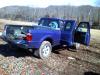
Thanks. I added some sticky back foam on the back of the lock to stop rattling. I do want to find a dirt/mud proof casing for the lock though. Just driving to the shop has clogged the key-way a few times with dirt.
Member
Joined: Feb 2010
Posts: 102
Likes: 0
From: CT
a small neoprene sleeve over the locks would stop the rattling and keep grime away from the lock. I use them on fishing reels etc. and know they make them to keep dog tags from jingling...I bet you could find one the right size or grab a sheet of neoprene and some velcro and make some up pretty easy
Edit - did a quick search and they make them for cell phones...might be about the right size for the lock too
http://www.strapya-world.com/categor...t2a/page1.html
Edit - did a quick search and they make them for cell phones...might be about the right size for the lock too
http://www.strapya-world.com/categor...t2a/page1.html
Last edited by meathead; Feb 22, 2010 at 08:15 AM. Reason: adding
Thread Starter
|
Member
Joined: Jul 2008
Posts: 115
Likes: 0
From: Temecula, CA
Not much has been happening on the build lately. Most of the past few weeks have been doing general maintenance and repairs such as; chasing a coolant gremlin, turning rotors, repacking bearings and so on.
Tough, I have put together some photos from the test trips during construction.
Gallery page is here: Safari Pacific - Global Expedition


Tough, I have put together some photos from the test trips during construction.
Gallery page is here: Safari Pacific - Global Expedition
Thread Starter
|
Member
Joined: Jul 2008
Posts: 115
Likes: 0
From: Temecula, CA
With gear weight being an issue for fuel range, getting unstuck and generally being a pain. I decided to have a go through with all of my gear to make sure there's nothing I don't need or something I've missed. First I empty out the truck laying everything on the floor.

Then opening up all the bags, containers and what have you on my kitchen equipment.

After checking everything off I repacked everything into the kitchen drawer. The only thing I've missed here is dish soap.

Next I move on to the cab interior gear. The two yellow cases hold my cameras and my laptop. The black case is currently empty, though is for random bits we may need and to function as our washing machine. The two sleeping bags are primarily for sound deadening in the cab. But they also can be used if the weather gets colder than expected and to keep gear "out of sight".

Then opening up all the bags, containers and what have you on my kitchen equipment.
After checking everything off I repacked everything into the kitchen drawer. The only thing I've missed here is dish soap.
Next I move on to the cab interior gear. The two yellow cases hold my cameras and my laptop. The black case is currently empty, though is for random bits we may need and to function as our washing machine. The two sleeping bags are primarily for sound deadening in the cab. But they also can be used if the weather gets colder than expected and to keep gear "out of sight".
Thread Starter
|
Member
Joined: Jul 2008
Posts: 115
Likes: 0
From: Temecula, CA
I load the fridge and cases into the extended portion of the cab. Jackets and other small items fit nicely on the National Luna power pack.

Next I stuff one sleeping bag behind the boxes and power pack for noise proofing. Then the second sleeping bag is laid over the cases.

When the truck will be left alone the sleeping bag will be pulled to hide the bright yellow cases. Yeah, I didn't think of that when I bought the cases.

On to the recovery gear, tools, spare parts, fuel cans, sleeping gear and all the rest.

Next I stuff one sleeping bag behind the boxes and power pack for noise proofing. Then the second sleeping bag is laid over the cases.
When the truck will be left alone the sleeping bag will be pulled to hide the bright yellow cases. Yeah, I didn't think of that when I bought the cases.
On to the recovery gear, tools, spare parts, fuel cans, sleeping gear and all the rest.
Thread Starter
|
Member
Joined: Jul 2008
Posts: 115
Likes: 0
From: Temecula, CA
Since we'll be carrying tons of gear in a small space I have to meticulously pack away every piece. Even the chains are packed as tightly as possible.

The first layers are placed in the lower storage boxes. This will be the gear not used nearly as often.

The second layers are all the gear that will be used almost everyday. For starters the toilet, glass cleaner, air hose and fuel filler.

Although currently empty, the top right drawer will be used for dry or canned food storage and hold the stove itself.

The first layers are placed in the lower storage boxes. This will be the gear not used nearly as often.
The second layers are all the gear that will be used almost everyday. For starters the toilet, glass cleaner, air hose and fuel filler.
Although currently empty, the top right drawer will be used for dry or canned food storage and hold the stove itself.
Thread Starter
|
Member
Joined: Jul 2008
Posts: 115
Likes: 0
From: Temecula, CA
Now all I have left are the larger items left. If you look at the original gear shot you'll see how much by comparison was stuffed into the composite drawers. Most of this gear will be set around the drawers. The Hi-Lift and Maxtraxx will be attached to the exterior of the truck.

The fuel cans are set behind the drawers first. Then all the rest gets places along the sides.

My mind is a little more at ease knowing I have all the equipment I need. I would like to shed more of it, though I'm pretty much down to the basics.
The squeegee is probably the only piece that's really not necessary.
The fuel cans are set behind the drawers first. Then all the rest gets places along the sides.
My mind is a little more at ease knowing I have all the equipment I need. I would like to shed more of it, though I'm pretty much down to the basics.
The squeegee is probably the only piece that's really not necessary.


