When you click on links to various merchants on this site and make a purchase, this can result in this site earning a commission. Affiliate programs and affiliations include, but are not limited to, the eBay Partner Network.
97 Ranger 4-cyl breaks down on highway - major white smoke from under the hood
Hi. I have a 97 Ford Ranger / 2.3L / 4 cylinder (L4) / 5 speed manual / XL Supercab / 140k miles.
BACKGROUND:
I had been having some Check Engine issues and ran rough in town stop light to stop light. But was fine on the highway.
On several visits to the parts store, their OBD tester showed:
PO303 (Cyl 3 misfire detected)
PO141 Bank 1 Sensor 2 O2 Sensor (heater circuit malfunction)
PO171 Bank 1 Combustion Too Lean (the most recent new code to show up)
And the following would show up sometimes, but other times not:
PO 402 EGR Flow - Excessive Detected
P1409 EVR (I don't recall the exact error message)
Regards the PO141 code, O'Reilly's sold me a Bosch O2 Sensor (Bosch 15719) and the sales rep told me it was the sensor closer to the engine. And with the attached cable length on the sensor showed was indeed the sensor closest to the engine. But I've been advised the Sensor 2 is for the 'downstream' sensor, furthest away from the engine. And the other sensor, that I replaced is the upstream sensor. And the error continued.
Then back issues showed up and I had back surgery this past year and thus drove the vehicle sparingly. Never resolving the check engine issues. (My bad).
Ran on the highway ran fairly well. But recently noticed longer acceleration times and unable to top 65 in 5th gear.
I bought spark plugs and plug wires and had plans to change next week.
ISSUE:
Yesterday as driving down the Interstate, was 90 miles into my trip, I noticed loss of power even in fourth gear. (note it was the hottest day of the year at 100F). It seemed I used more gas than usual for that distance. I stopped for gas on the Interstate and power seemed to improve. Then about 130 miles into my trip I hit some heavy stop and go traffic, and wasn't able to keep an idle and the engine died numerous times if/when I didn't give it gas at a dead stop. The heavy stop and go heavy traffic and the issues persisted for a half hour for more than five miles. Then when traffic opened up the truck seemed to have a bit more power in 4th gear again. And up to that time all my dash gauges were showing fine. Then a couple miles or so down the interstate, driving 65mph in the inside lane, the check engine light started flashing quickly. And at the same time a sudden loss of power, rough sounding engine with heavy white smoke coming under the hood. And looked back in rear view mirror, with nothing but heavy white smoke. Managed to cross three lanes in heavy traffic and was able the vehicle to the outside emergency lane, finally coming to a stop.
Looked under the hood and saw oil dripping everywhere but with all the oil everywhere I could not find a prime source. Looked like the oil came from the top end of the engine and dripped down. Measured the oil at the dipstick and it seemed like I was at least a quart plus down (I checked the oil before I left on the trip). And it didn't look like any water was in the oil. And my radiator overflow tank was at the proper level. So I figured I lost all that oil during that period of "white smoke".
So had my vehicle towed home. Today in daylight, I did some more inspection and removed the air intake system (hoses and canister) from the air filter to the throttle body. There was significant oil up to the canister piece that fits on the air filter canister (but no oil in the actual air filter), and significant oil inside all the hoses up to inside the throttle body (up to the butterfly which I could see),
When I disconnected these hoses I noticed the blow-by hose connected to the intake hose system was not connected to anything. And a tube opening on the valve cover was open without the a blow-by hose attached and, with no clamp. So I assume all that oil and came out of that blow-by tube on the valve cover, (white smoke created by hot oil hitting the engine).
So appears to me that its not a blown head gasket or worse, which I first feared.
I have the vehicle parked at home.
QUESTIONS:
So what are the suggested steps to troubleshoot and repair? Besides reattaching everything and putting a clamp on the blow by hose? And installing new spark plugs and plug wires. I previously replaced plug wires around 60k, even though the manual recommended 100k mile replacement. (And a couple yeas back I had the dealer replace the PCV, which was recommended in the manual and included in the warranty. The timing of the initial check engine lights appeared shortly thereafter)
Is there suppose to be a large amount of oil in the air intake system after an incident like this and should I try to clean/flush out the hoses and the inline canister?
NOTE:
When I disconnected the inline canister from the hoses in the air intake system, unfortunately I failed to document the direction which the canister goes. It has outside markings "ADP with a forward arrow with some horizontal lines, and then at the other end upside down markings with a greater sign PP less than sign. Should the forward arrow point toward the throttle body or toward the air filter (I'm thinking in the direction of air flow, toward the throttle body).
if there are any other details I should post please let me know, and appreciate any assist you can offer.
I've taken some photos of the engine with air intake hose system unattached, if that might help.
Thank you for the prompt reply. The spacing of the post looks good on my laptops Firefox web browser. But I'll add an additional line between paragraphs to be safe. Any suggestions for a FAQ on how to do a compression test on his 4 cylinder. And can the tester tool be rented from a parts store? A number of the spark plug holes on this 4 cylinder are difficult to access. Thanks.
Doesn't sound good
reads like you got a hole in a piston
So yes compression test would be next step
You need to remove 1 spark plug from each cylinder, easiest one to get to, but 1 from each cylinder.
Yes, you can rent a compression tester kit, hose, gauge and fittings for different size spark plug holes/threads
With 4 spark plugs removed first, you can then do the test
2.3l should show about 160psi in each cylinder
Blow-by is the hot gases from cylinder combustion(firing) that "blows-by" the piston and rings in that cylinder.
And some blow-by is normal, that's the purpose of the PCV(positive crankcase ventilation) system.
As the HOT gases blow-by the rings it vaporizes some of the oil on the rings, piston sides, and cylinder walls.
PCV system sucks that oil vapor out and it is burned in the engine
Your PCV system hoses blew apart, and spewed oil all over engine bay, which means pressure in the crank case spiked very high
Which in my mind means a piston lost compression, rings broke or piston got a hole
Hopefully I am wrong, compression test will tell you
Yes, arrows go in direction of air flow
You could unplug the coils, the 3 wire connectors on the coils, then crank the engine, if there is a lope to it then most likely there is a cylinder with low or no compression
Thank you for the info. I was afraid that an issue might be a damaged piston or similar. So I have some decisions in front of me. To ride my bike to the local (out in the boondocks) parts store to rent the compression tools (that is if they have them), or otherwise ride the bus 10+ miles to the big town, to get tools, which would be a logistically difficult,as I would need to return the tools. So four bus trips. And it might not even be worth renting the compression test tools to find out if the piston or similar is damaged, as repairing that engine would be more than the worth of the vehicle. So its sounds like the vehicle might be destined for the junkyard and I'll be without wheels for awhile. Indeed this is a tough one.
You need a 1995-1997 2.3l Ranger or Mazda B-2300 engine
1994 or earlier won't work, and 1997 was the last year for this 2.3l
You can rent a car or u-haul pickup for $20/day plus mileage, and as long as you don't rack up the miles you could get the tester and do the work in 1 day(24-hours).
But I understand when money is tight.
A lot of older trucks, and cars, are sold as "mechanics specials", pickup trucks are sought after, doesn't matter how old they get, lol.
So it still has some value
But I would certainly try to diagnose the problem before I sold it
Good info, thanks again. Called O'reilly two miles away and they have a tool loner program where I can buy a cylinder compression test kit for $40, and can use it then return for full refund. I can ride my bike to pick up (I should have asked if they deliver). I think I also need to get a universal socket extension and some sort of goose neck socket extension (forget what they call it) to access the spark plug holes. Anything I should know special before puling the spark plugs? I need to study the info here, as well as hopefully find a video showing how to do a cylinder compression check. I took several years of old skool auto mechanics in high school but not up-to-date on my skills and don't remember the steps. I have new double platinum plugs to put into the engine, but if the motor is shot, I don't want to waste them on it. So if I end up having to go with a rebuilt or used engine, what's the general service and materials cost for pulling the old engine, and putting in another one (and all the testing that goes with it)? And the shipping? And will I get anything for my old engine? Would you know of an online FAQ that might explain the ins and outs of an engine replacement, and specific to my 4 cylinder Ranger? Again I appreciate the info.
Sorry my posts are all showing up without paragraph breaks. My browser shows proper spacing when I'm creating a post (and I've been adding two lines of space between paragraphs to be safe). But on this site once they are submitted my posts all appear as one big single paragraph. Don't seem to have this issue anywhere else. Everyone else's posts appear normal.
Before you remove the spark plugs to do a compression test remove the spark plug boot
and make sure the spark plug and the cylinder head is clean.
You do not want dirt, grease or other debris falling into the engine.
I use non flammable brake clean and compressed air to do this. just make sure to use eye protection.
Do not worry about the spacing that I mentioned since you did your best and the issue is still present.
BTW we are looking for a major loss of compression in one or more cylinders.
Since it is hard for you to get the compression test gauge here is another method.
You can remove one spark plug at a time, jam your finger over the spark plug hole to seal it off. then have some one crank the engine over.
Just make sure the coils are disconnected and disable the fuel pump by removing the fuel pump relay.
You do not want to get shocked by the coil or damage any electronics with the voltage from the coils.
If you have compression it will be hard to impossible to hold your finger against the spark plug hole and keep it sealed.
A cylinder that has good compression or at least no obvious problem you will feel and hear compression go past your finger and make a loud noise as the air escapes.
This method is not as good as using a compression gauge however if there is a obvious total loss of compression or major loss of compression you will know.
let us know what happens and we can help you further.
This may offer some hope? I know you're having more serious oil pressure issues but it's worth a look.
I have a 1997 Ranger with a 2.3L/4cyl engine and I did a topside soft rebuild this winter - PCV valve had been clogged for some time before the truck was mine and made an awful mess of the intake and egr... Upon taking it apart I found a small brown canister (paint identical to the block) below the lower intake with a small round port - this is what the PCV plugs into and it's an oil/air separator. It was way way more clogged than the PCV and left unattended would have rendered the new valve purposeless and oil would have resumed backing into my intake immediately.
It is directly below the front of the intake manifolds and held in place by a single bolt (8mm?) unfortunately there isn't enough clearance to remove it without removing the lower manifold but it is serviceable.
Also, I'd clean the heck out of your mass airflow sensor - oil that close it's going to be compromised.
Last edited by Mecánica Intensa; Jun 27, 2017 at 07:18 AM.
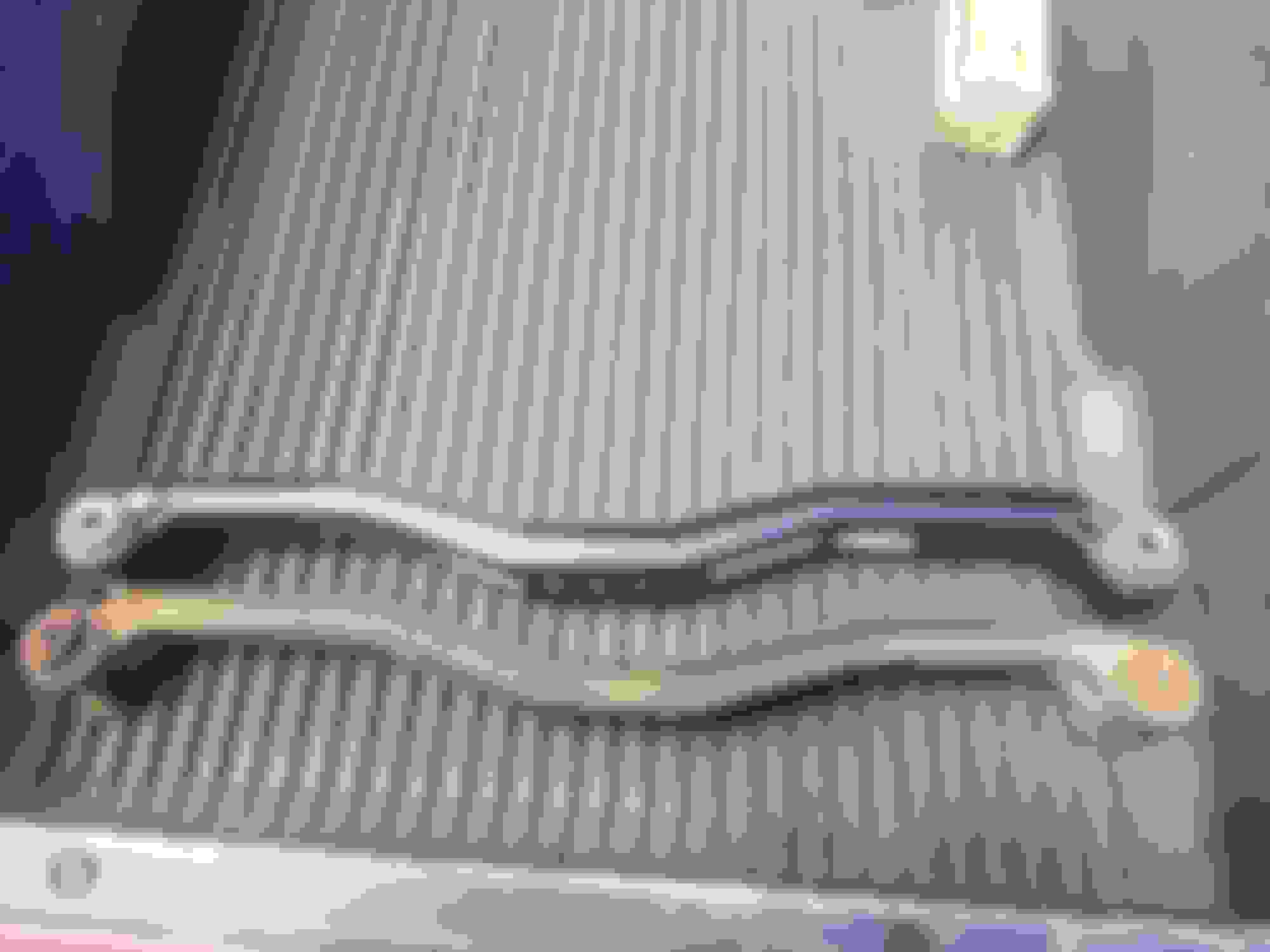
Alright here is a update for those who care, your advice was crucial to make this happen! As you can kind of see this bar was not in the best of shape. Yup, that's a toasted Transmission mount! I say it turned out pretty well!