


My first Truck


Thread Starter
|
Member

Joined: May 2015
Posts: 1
Likes: 0
From: London, ON
 My first Truck
Hi Everyone,
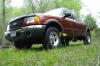
I just bought my first truck and its a 2002 Ford Ranger 3.0! I'm excited to get it on the road. Any tips and advice you have for me is much appreciated!
Also, what mods have you guys done to make it look more awesome. I'm thinking of doing lifts, getting bigger tires, etc. Share what you have with me. Here's a pic of the Ranger

I just bought my first truck and its a 2002 Ford Ranger 3.0! I'm excited to get it on the road. Any tips and advice you have for me is much appreciated!
Also, what mods have you guys done to make it look more awesome. I'm thinking of doing lifts, getting bigger tires, etc. Share what you have with me. Here's a pic of the Ranger


Nice looking truck
Ranger's are good, reliable trucks, but every engine has it's little issues
3.0l engine did have one flaw over the years, the cam synchronizer bushing would start to wear out and cause a high pitch squeal almost like a fan belt slipping, they last about 80-100k and need to be replace.
Not an expensive part just takes a bit of labor to swap it out
Good read here: Ford Ranger 3.0L Camshaft Position Sensor
If you hear the noise you need to change this sooner than later, the cam synchronizer runs the oil pump so..........don't want that to stop
2002 3.0l is also getting near the years of the exhaust valve seat issues.
Ford's TSB just covered '04-'06 but it did effect earlier 3.0ls
**************************
TSB 05-26-3
FORD: 2004-2006 Ranger
ISSUE
Some 2004-2006 Rangers 3.0L-2V "Vulcan"vehicles may exhibit:
- Malfunction indicator lamp (MIL) on with diagnostic trouble codes (DTCs) P0300-P0306 and P0316
- Rough running at various RPM
- Rough idle
- Misfire
ACTION
This may be due to an engine exhaust valve seat recession causing a loss of compression. Refer to the following Service Procedure to diagnose exhaust valve seat recession.
SERVICE PROCEDURE
1. Perform a power balance rest to clarify if a cylinder is misfiring. Identify and keep record of any cylinder that has a concern.
2. Perform a manual compression test with the spark plugs removed to locate any cylinder that may have low compression. Refer to the appropriate Workshop Manual, Engine System, General Information, 303-00.
3. If no low compression is found per shop manual instructions, proceed with normal misfire diagnostics per the Powertrain Controls/Emissions Diagnosis (PC/ED) Manual for the appropriate model year.
4. If low compression is found and it is a cylinder that had a misfire on power balance, perform a leakdown test to determine the source of leakage that may be causing the low compression. Refer to the appropriate Workshop Manual, Engine System, General Information, 303-00.
5. If low compression is found in a cylinder that did not have a misfire detected then proceed with normal base engine diagnostics per the Workshop Manual, Engine System, General Information, 303-00.6.
If the exhaust valve is identified as the source, replace both cylinder heads with the newly released service cylinder heads. Refer to the appropriate Workshop Manual, Section 301-01A.
PART NUMBER / PART NAME
6U7Z-6049-A / Cylinder Head Assembly
*********************************
Ranger's are good, reliable trucks, but every engine has it's little issues
3.0l engine did have one flaw over the years, the cam synchronizer bushing would start to wear out and cause a high pitch squeal almost like a fan belt slipping, they last about 80-100k and need to be replace.
Not an expensive part just takes a bit of labor to swap it out
Good read here: Ford Ranger 3.0L Camshaft Position Sensor
If you hear the noise you need to change this sooner than later, the cam synchronizer runs the oil pump so..........don't want that to stop
2002 3.0l is also getting near the years of the exhaust valve seat issues.
Ford's TSB just covered '04-'06 but it did effect earlier 3.0ls
**************************
TSB 05-26-3
FORD: 2004-2006 Ranger
ISSUE
Some 2004-2006 Rangers 3.0L-2V "Vulcan"vehicles may exhibit:
- Malfunction indicator lamp (MIL) on with diagnostic trouble codes (DTCs) P0300-P0306 and P0316
- Rough running at various RPM
- Rough idle
- Misfire
ACTION
This may be due to an engine exhaust valve seat recession causing a loss of compression. Refer to the following Service Procedure to diagnose exhaust valve seat recession.
SERVICE PROCEDURE
1. Perform a power balance rest to clarify if a cylinder is misfiring. Identify and keep record of any cylinder that has a concern.
2. Perform a manual compression test with the spark plugs removed to locate any cylinder that may have low compression. Refer to the appropriate Workshop Manual, Engine System, General Information, 303-00.
3. If no low compression is found per shop manual instructions, proceed with normal misfire diagnostics per the Powertrain Controls/Emissions Diagnosis (PC/ED) Manual for the appropriate model year.
4. If low compression is found and it is a cylinder that had a misfire on power balance, perform a leakdown test to determine the source of leakage that may be causing the low compression. Refer to the appropriate Workshop Manual, Engine System, General Information, 303-00.
5. If low compression is found in a cylinder that did not have a misfire detected then proceed with normal base engine diagnostics per the Workshop Manual, Engine System, General Information, 303-00.6.
If the exhaust valve is identified as the source, replace both cylinder heads with the newly released service cylinder heads. Refer to the appropriate Workshop Manual, Section 301-01A.
PART NUMBER / PART NAME
6U7Z-6049-A / Cylinder Head Assembly
*********************************


Thread
Thread Starter
Forum
Replies
Last Post
l2en
General Technical & Electrical
34
Sep 5, 2006 08:28 AM


